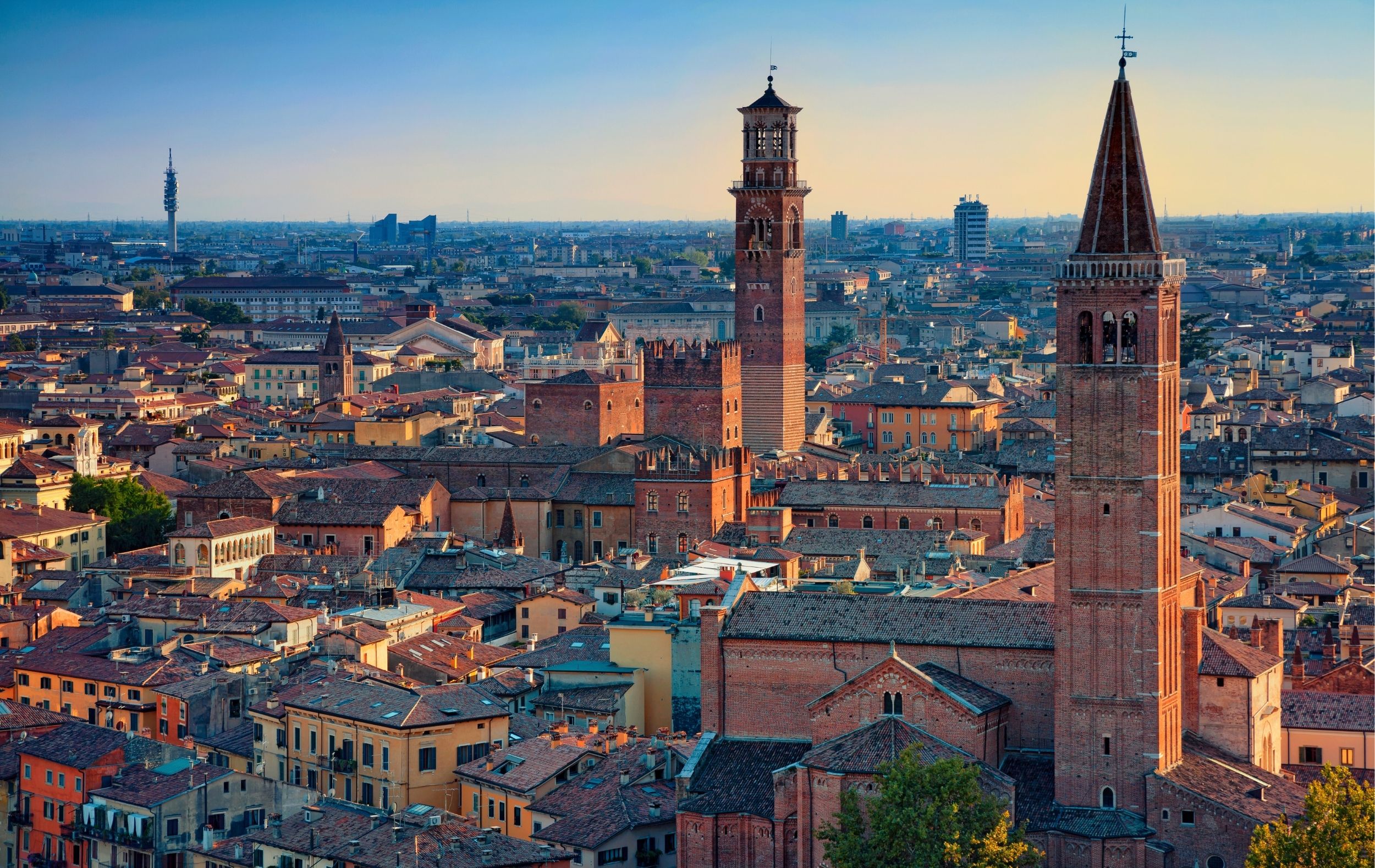

An itinerary in Verona can follow many directions. You can chase the most famous monuments, quickly cross the main squares, or limit yourself to the places featured in the most well-known photographs. Yet the city reveals its most authentic character when you choose to slow down.
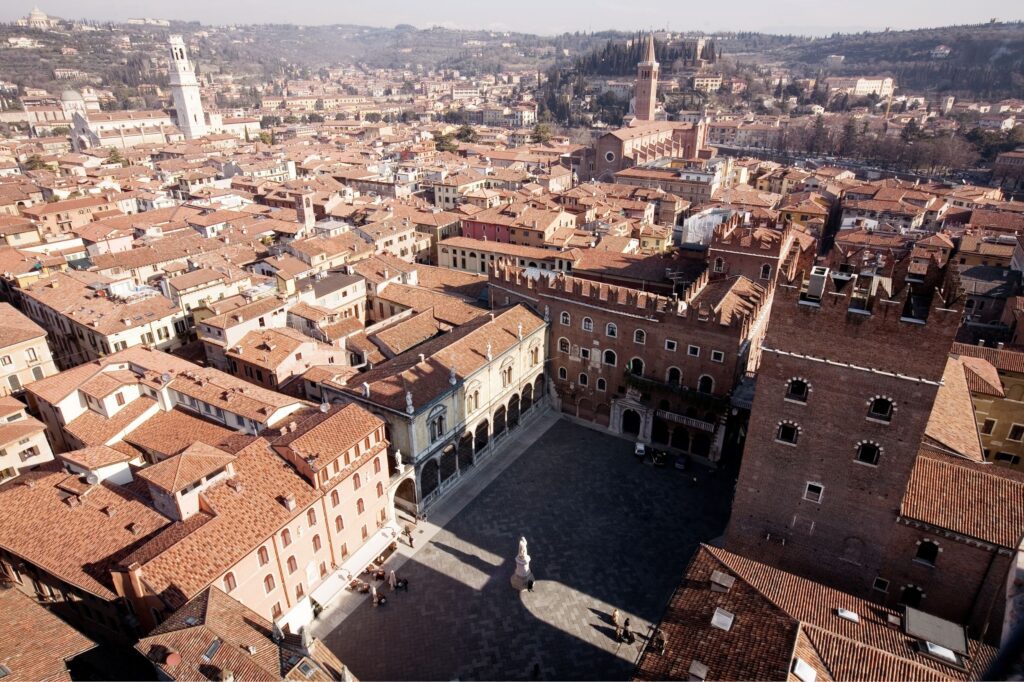
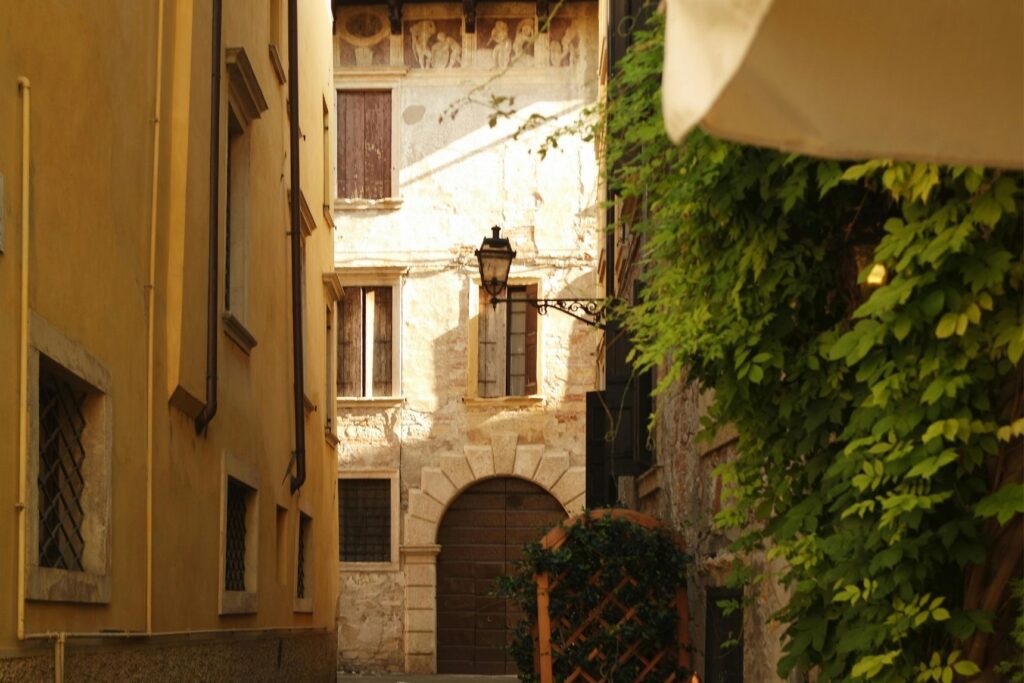
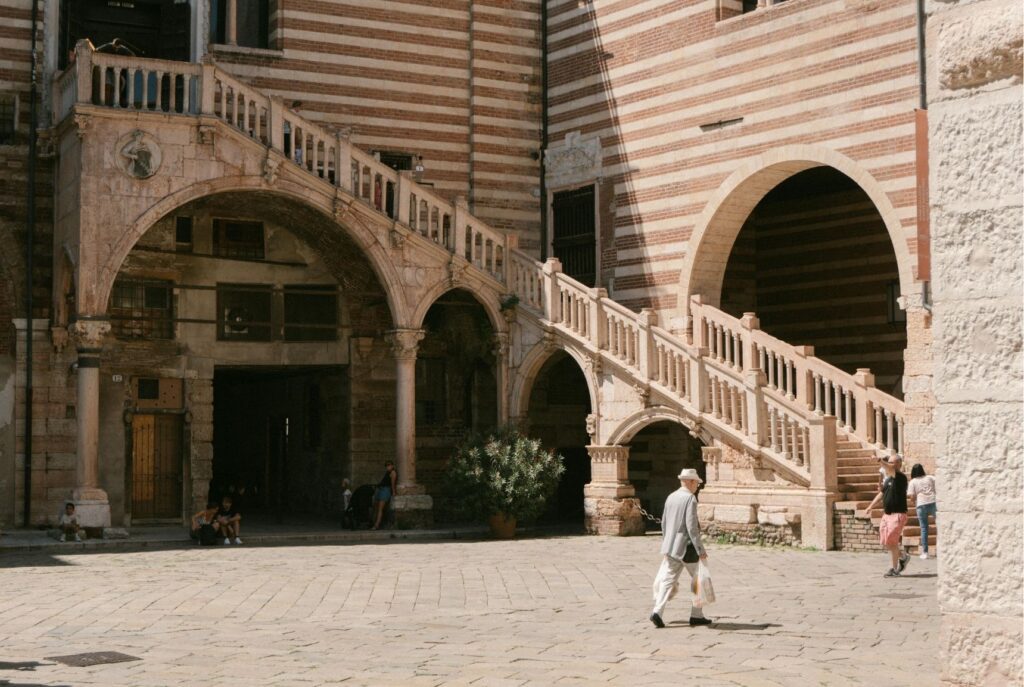
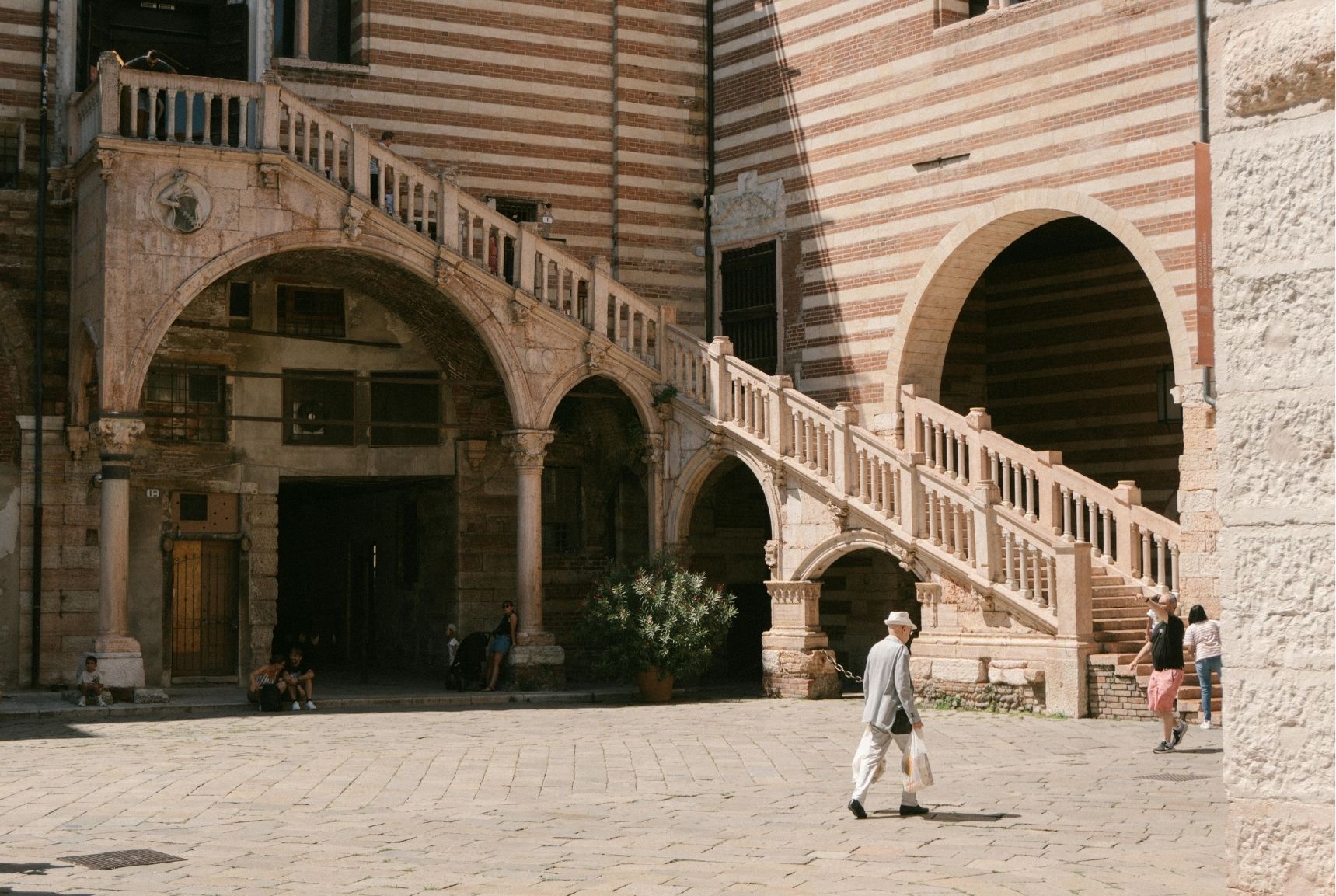
The most interesting Verona often begins where tourist itineraries end. Just a few streets away from Piazza delle Erbe or the Arena, you enter a different city—one made of medieval alleys, hidden courtyards, historic shops, vibrant neighborhoods, and views that constantly change perspective.
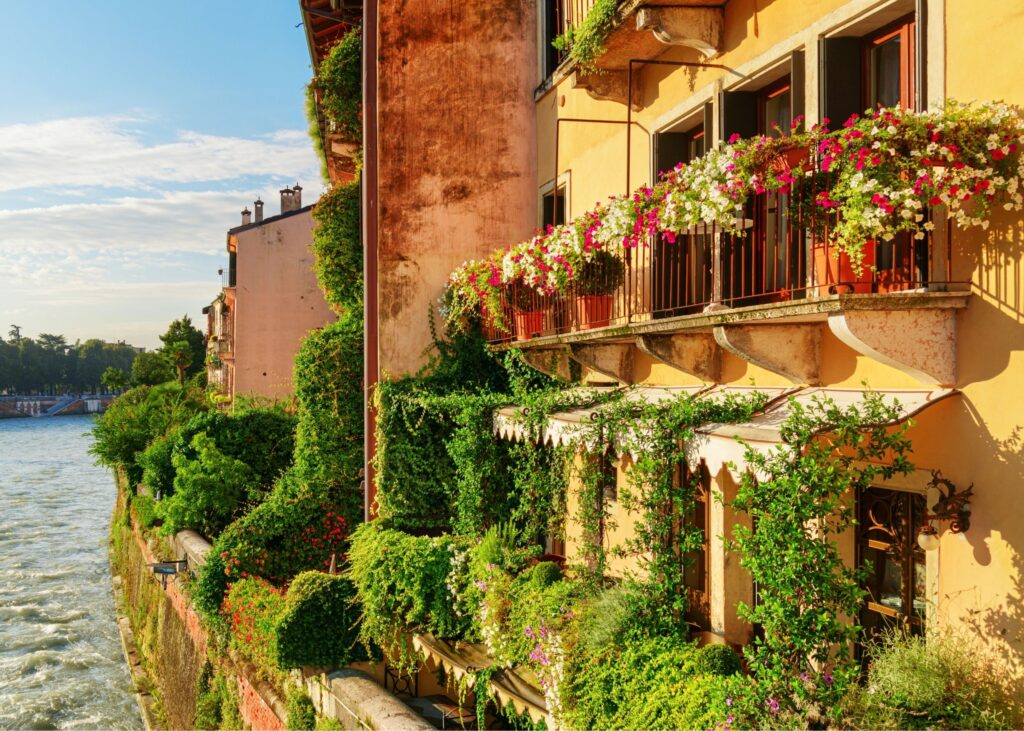
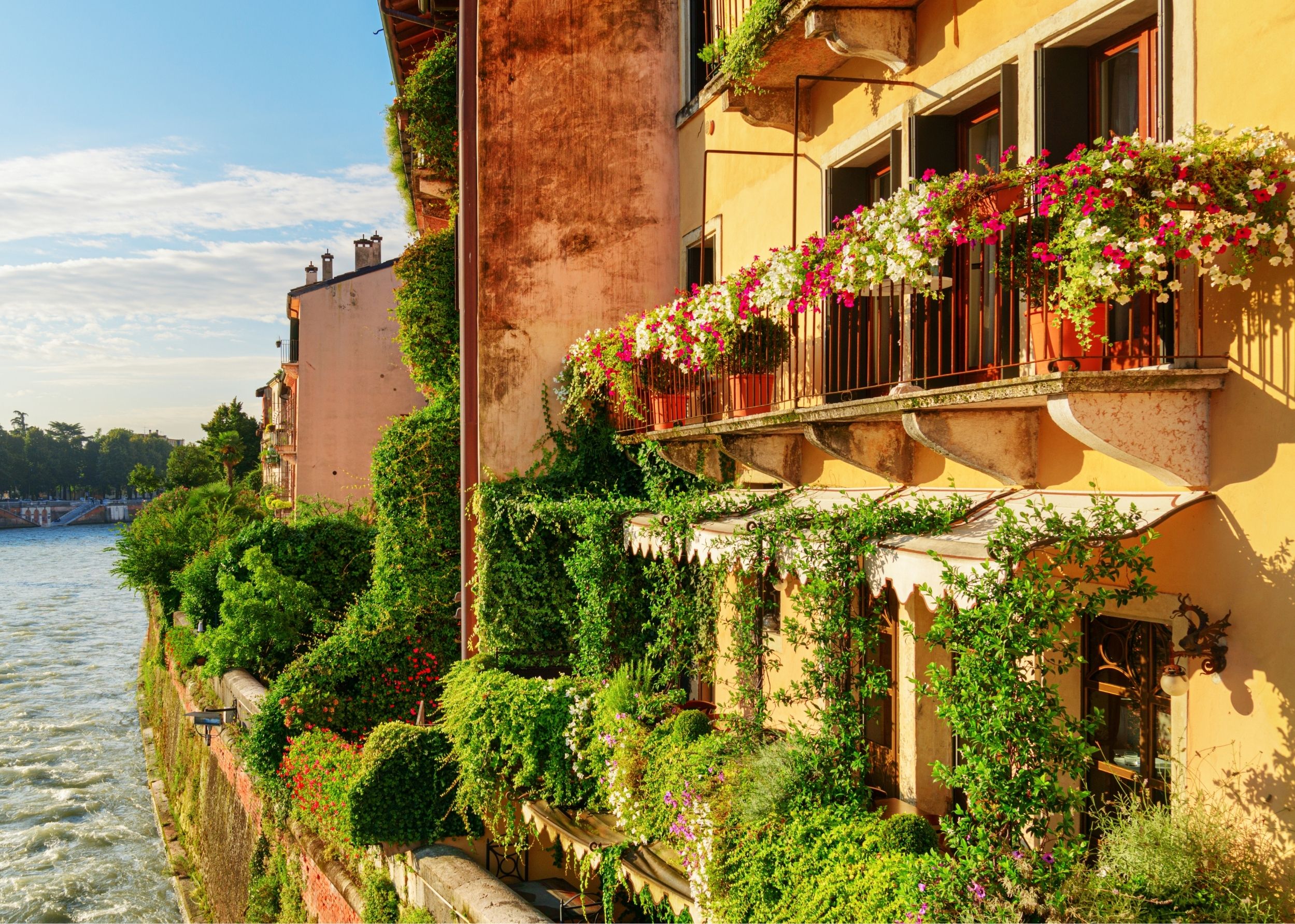
Verona does not allow itself to be understood in a straight line. It is traversed slowly, accepting detours, sudden stops, and unexpected encounters. Roman traces coexist with the medieval town, Venetian architecture dialogues with Austrian structures, and the course of the Adige River accompanies every change of light throughout the day.
As Walter Benjamin observed during his trip to Verona, the city guards an urban sensitivity revealed only to those willing to observe carefully.
This itinerary passes through some of the places that best tell this story: bridges, churches, neighborhoods, hills, and everyday spaces that continue to shape the most authentic face of the city today.
Verona is one of those Italian cities where the past continues to live most naturally in the present.
Verona Itinerary in One Day
If you only have a single day to visit Verona, the temptation is to rush from one monument to another, trying to see as much as possible. However, the city reveals its best self when experienced at a different pace. The compact size of the historic center makes it easy to explore on foot, connecting several key spots in just a few hours without giving up the pleasure of discovery.
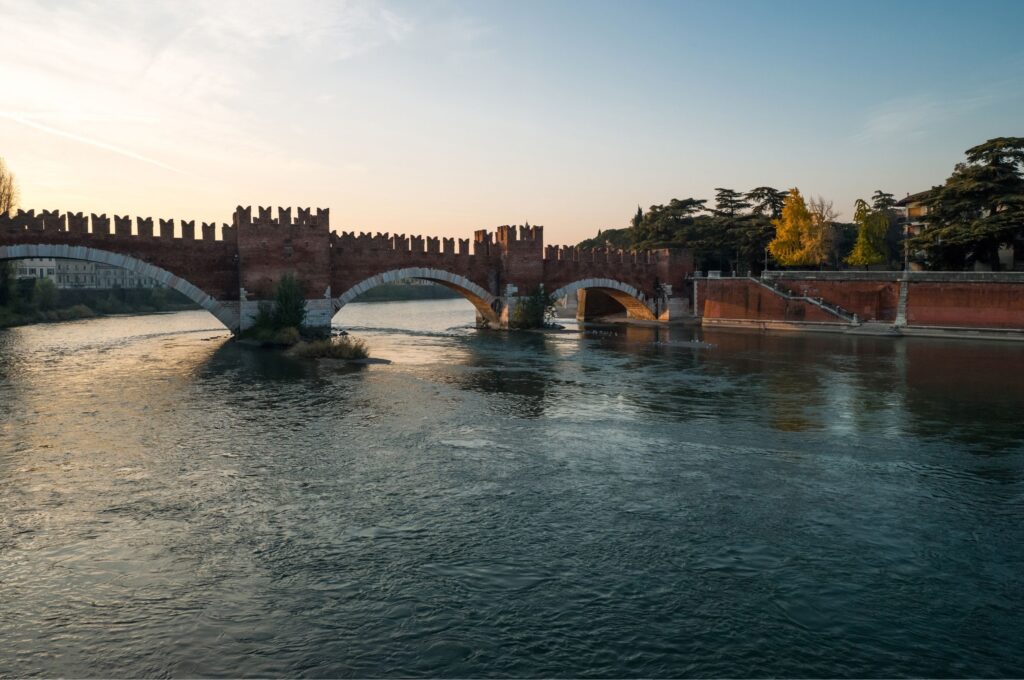
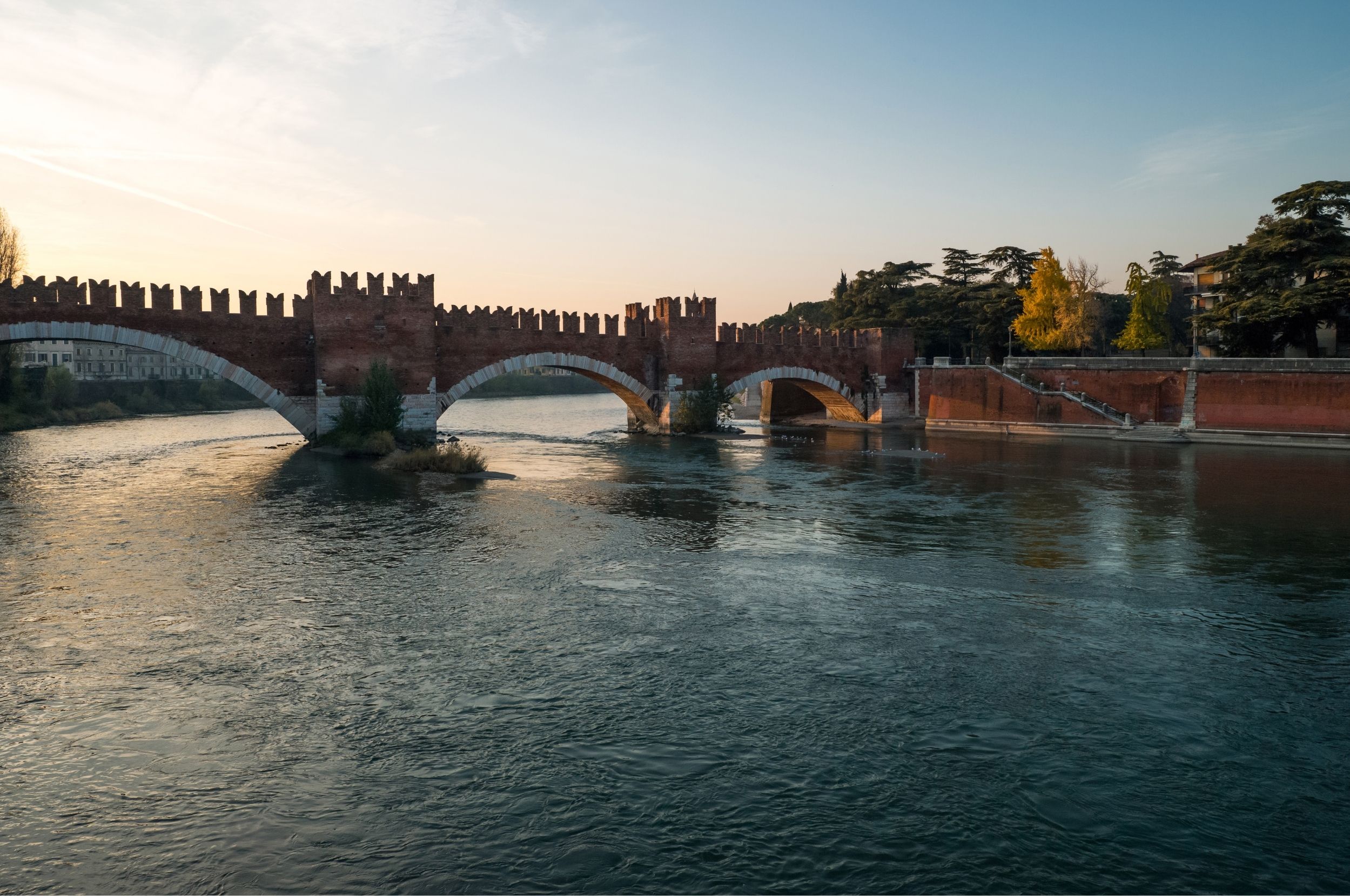
A one-day itinerary in Verona can start from the Castelvecchio Bridge and the livelier parts of the city, wander through the semi-deserted medieval alleys of the center, reach the bustling historical squares, and head up toward the peaceful, panoramic hills of Castel San Pietro. In the afternoon, neighborhoods like Veronetta or San Zeno offer a different perspective compared to the main routes, allowing you to observe a living, contemporary city.
Rather than accumulating sights, Verona invites you to build connections between places, people, and atmospheres. It is precisely this continuity between past and present that makes every walk a unique experience.
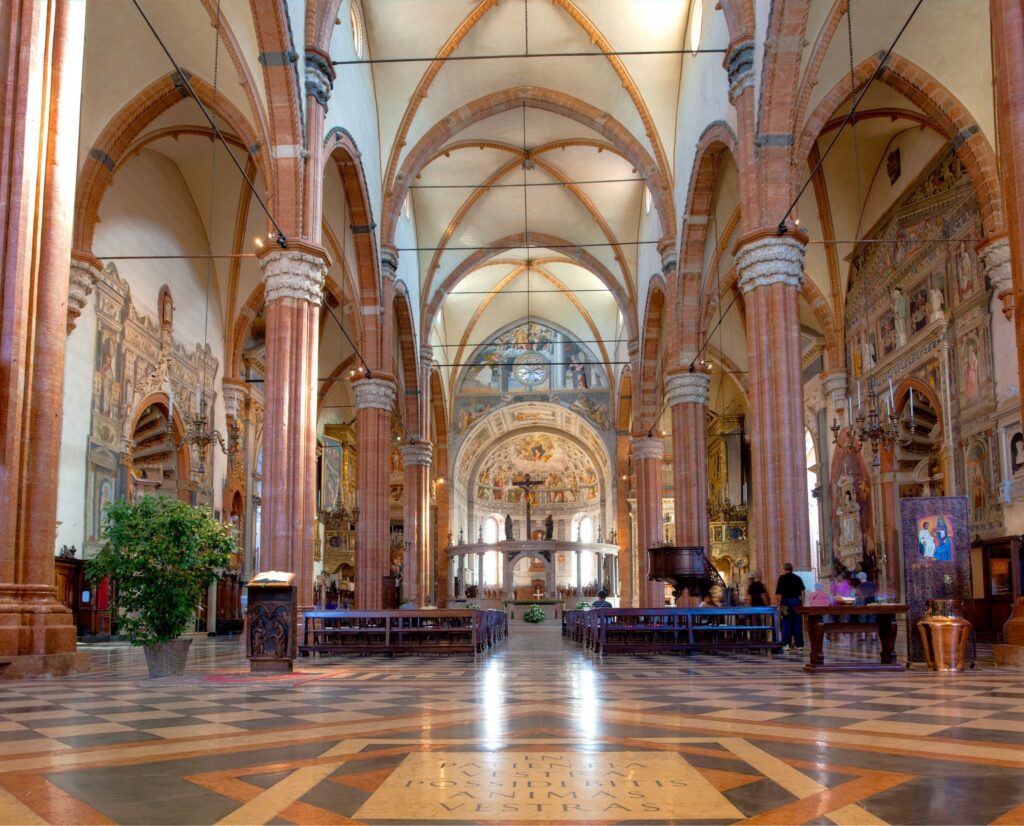
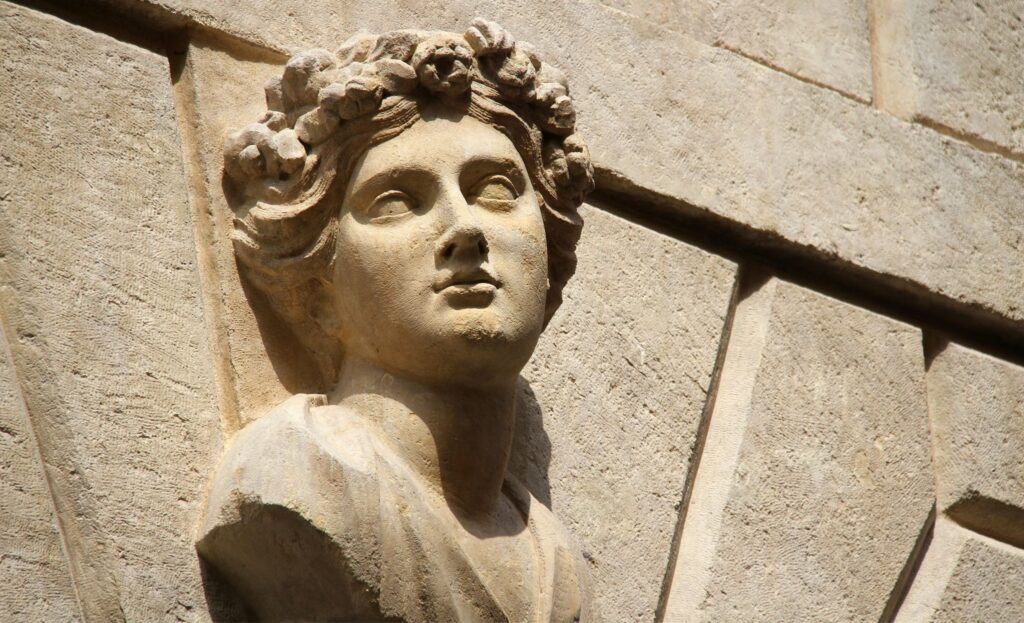
What to See in Verona on Foot
One of Verona’s less obvious qualities is its scale. Many historic cities require public transportation, continuous travel, or long walks to connect main points of interest. Verona, on the other hand, maintains a compact dimension that allows you to explore almost entirely on foot.
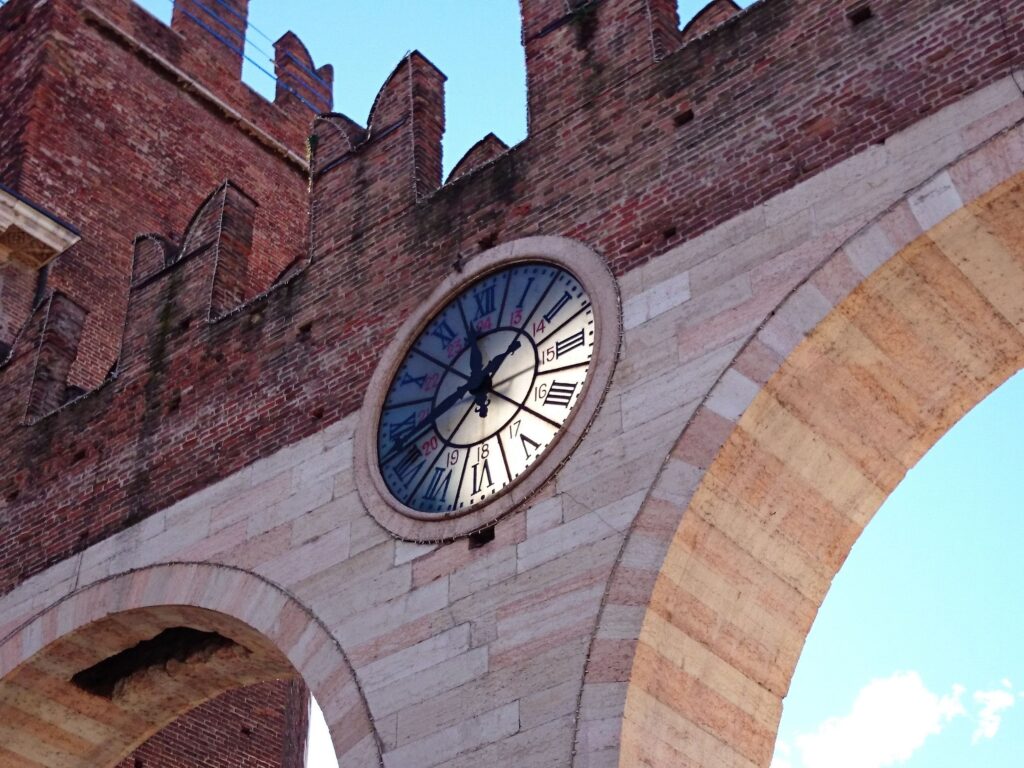
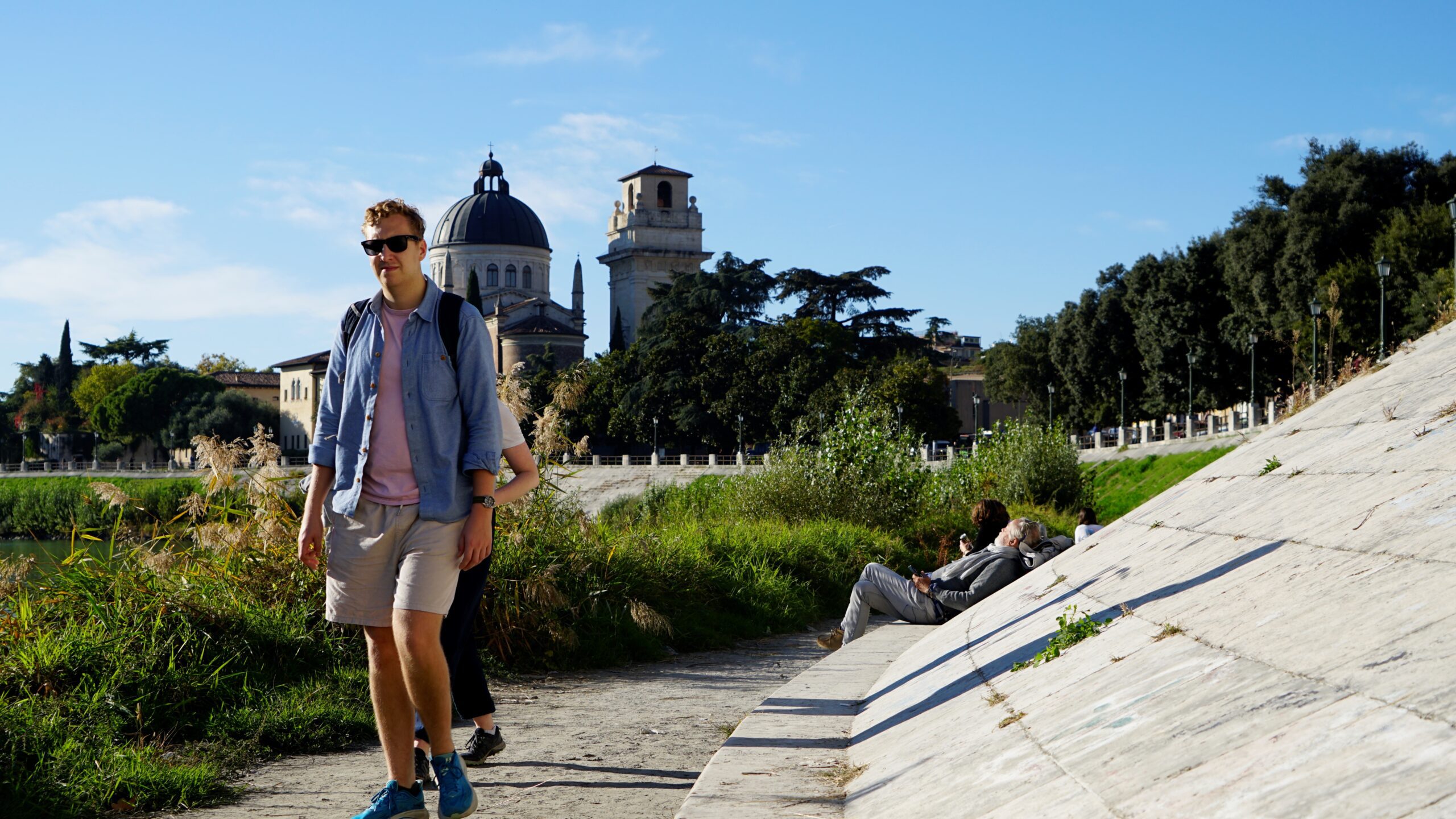
It is precisely by walking that the city reveals its true character. Distances between key spots are short, but what makes the journey interesting is not just the destination, but what happens between stops. An alley opening up unexpectedly, a courtyard hidden behind a gateway, an old shop, or simply light reflecting on the Adige can turn a stroll into an unexpected discovery.
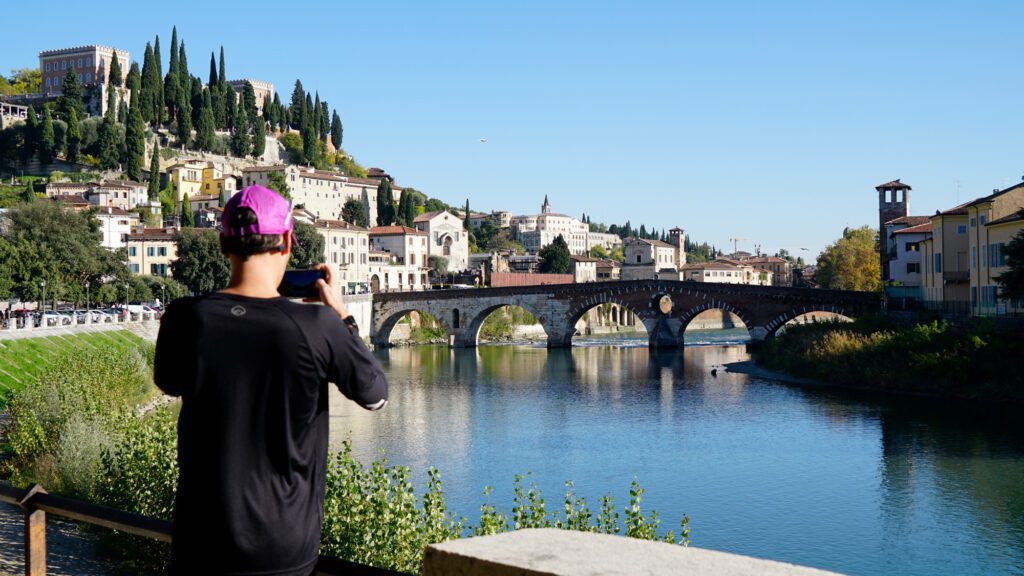
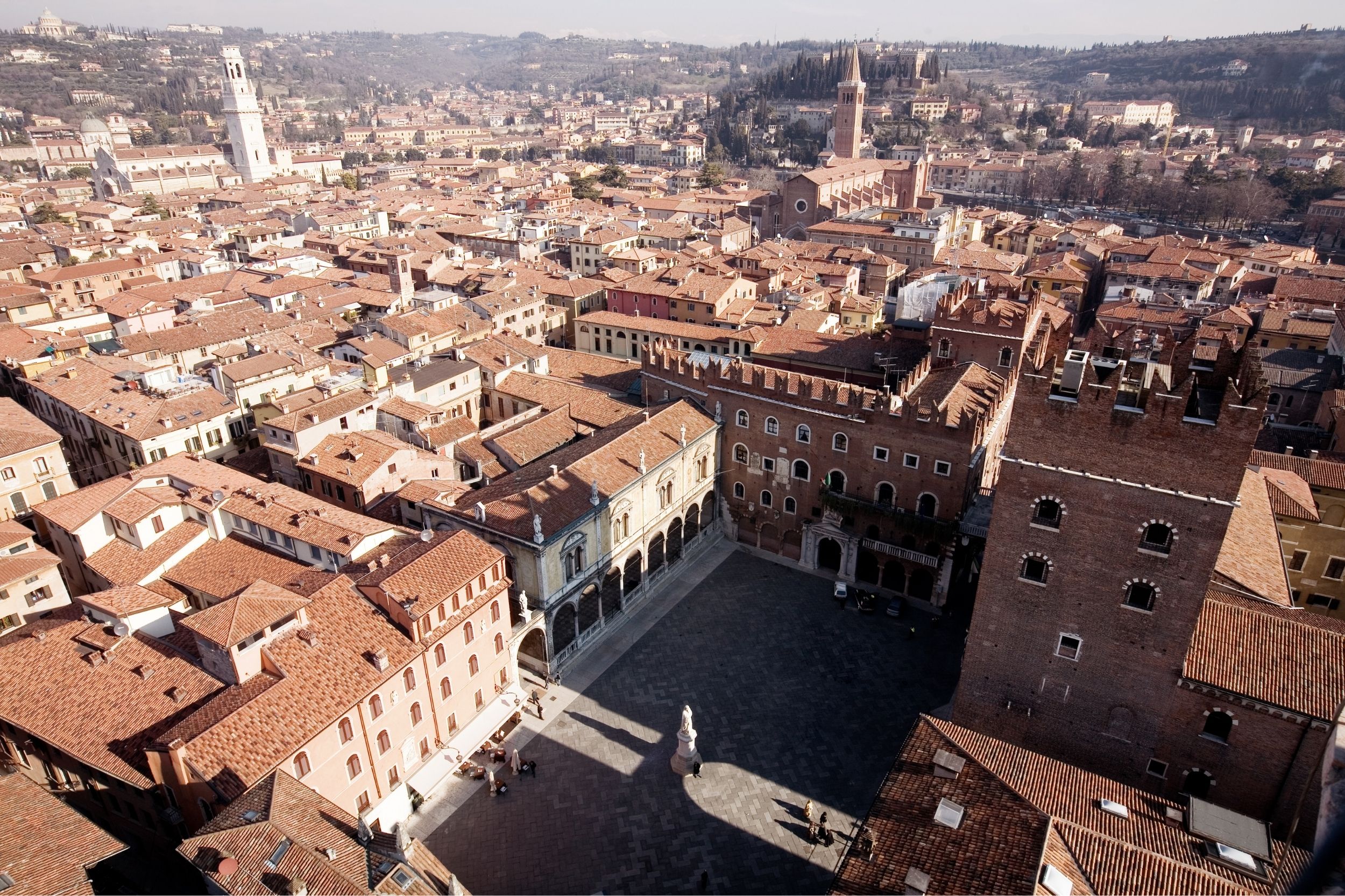
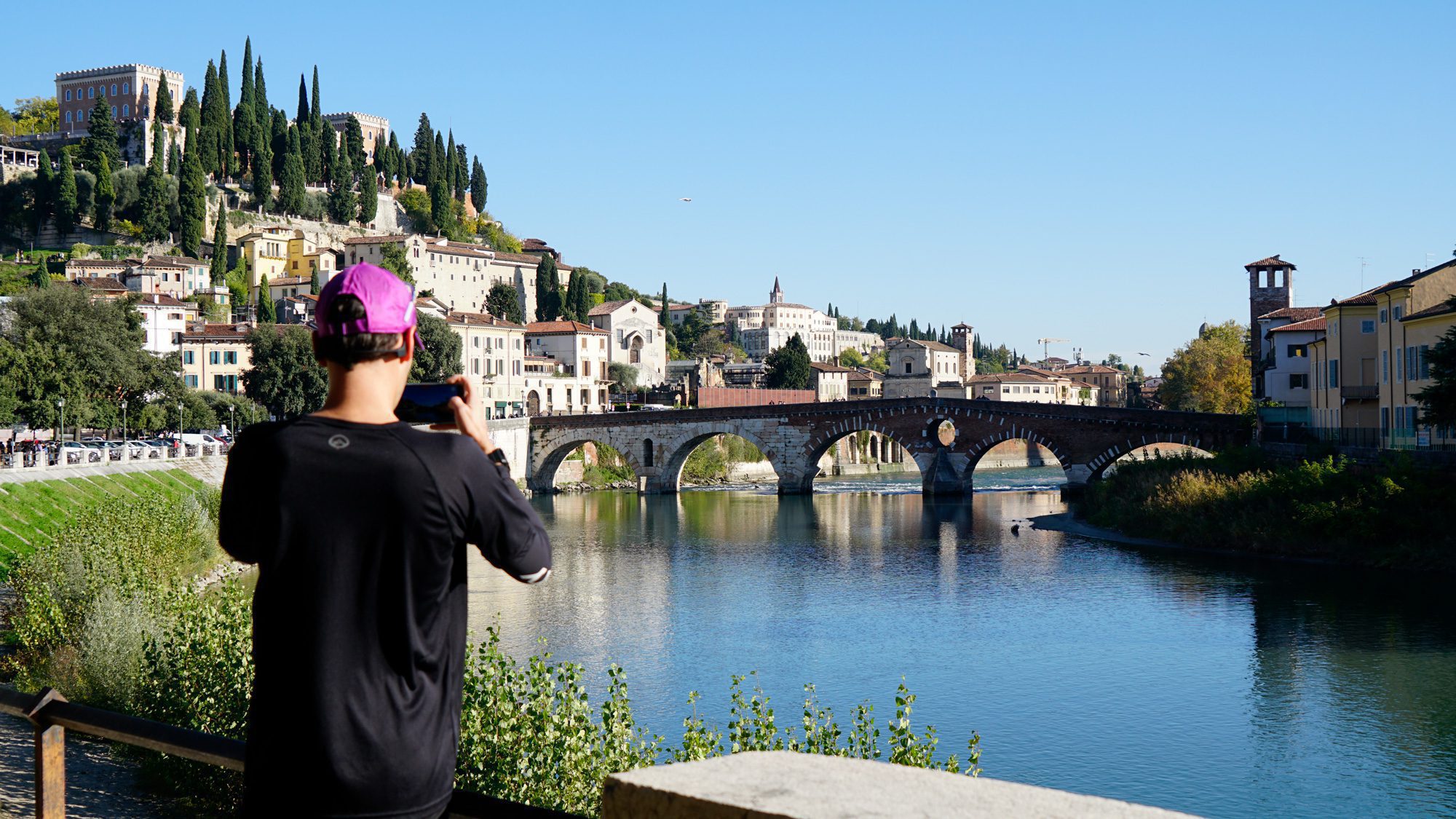
From Ponte Pietra to Piazza delle Erbe takes only a few minutes. From Castel San Pietro down into the heart of the center, the descent naturally guides your eyes toward bell towers, rooftops, and urban vistas. Neighborhoods like Veronetta, San Zeno, or Borgo Trento are also easily reached on foot without ever breaking your connection with the city.
For this reason, one of the best ways to visit Verona is to abandon overly rigid planning. Walking lets you follow the rhythm of the neighborhoods, observe the details, and catch that continuity between past and present. In Verona, the most interesting distance is not between two monuments, but between one story and the next.
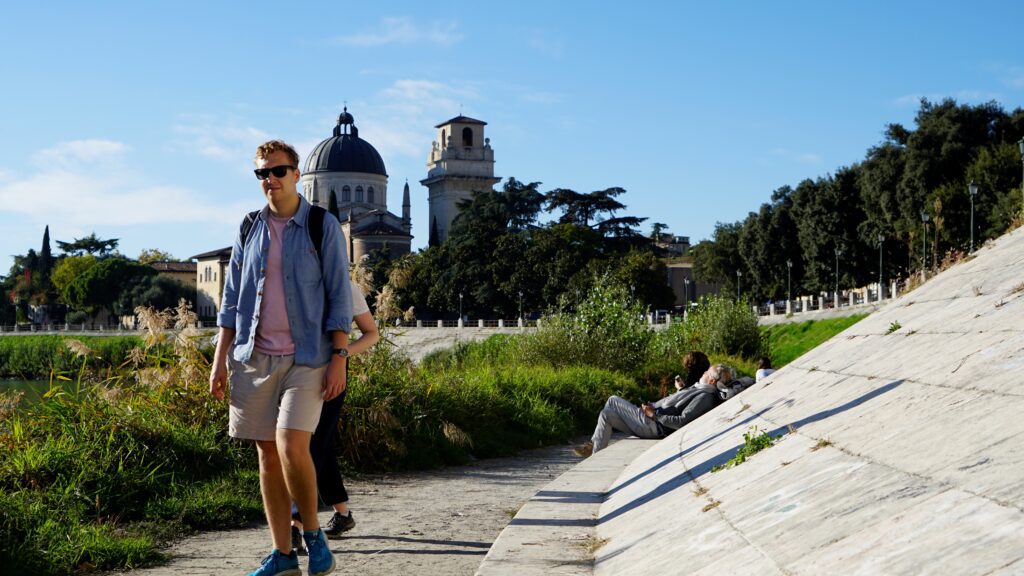
The Authentic Neighborhoods of Verona
Veronetta: The Neighborhood in Constant Evolution
Among all the city’s districts, Veronetta best reflects contemporary Verona. Long considered a transit area, it has transformed into one of the most dynamic and multicultural parts of town. The university presence has created a youthful, international environment where different languages, cultures, and habits live side by side. Independent bookstores, creative spots, cocktail bars, and historic shops share the same streets. At night, the neighborhood shifts energy while maintaining a spontaneity that sets it apart from more tourist-heavy zones.
Borgo Trento: Elegance and Quality of Life
Crossing the Adige brings you into a different Verona. Borgo Trento features tree-lined avenues, historic villas, and a strong residential feel. Here, the pace slows down and the city adopts a quieter, more orderly face. Strolling through this neighborhood means observing an everyday Verona, far from major attractions but deeply tied to urban quality of life.
San Zeno: Tradition and Identity
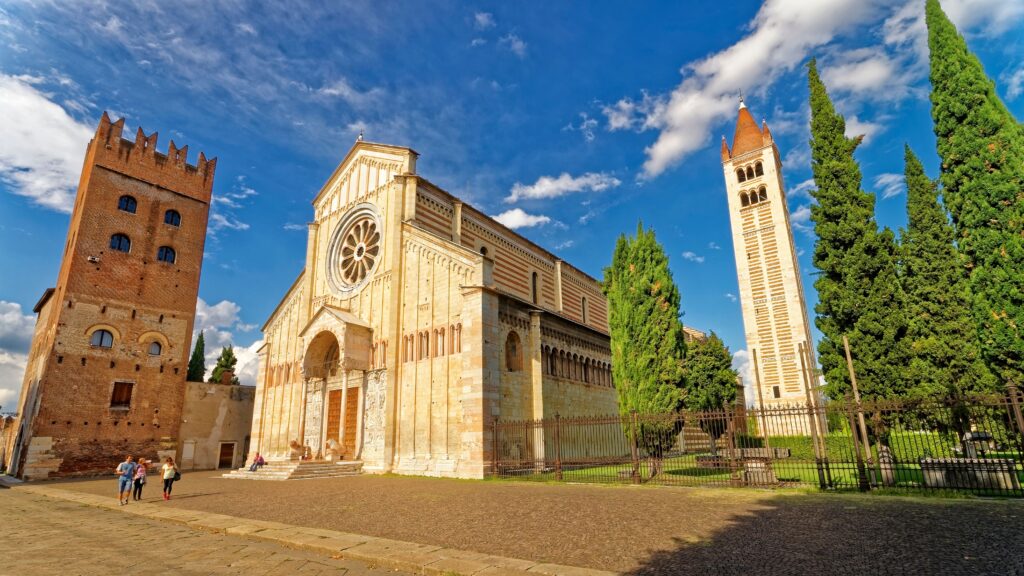
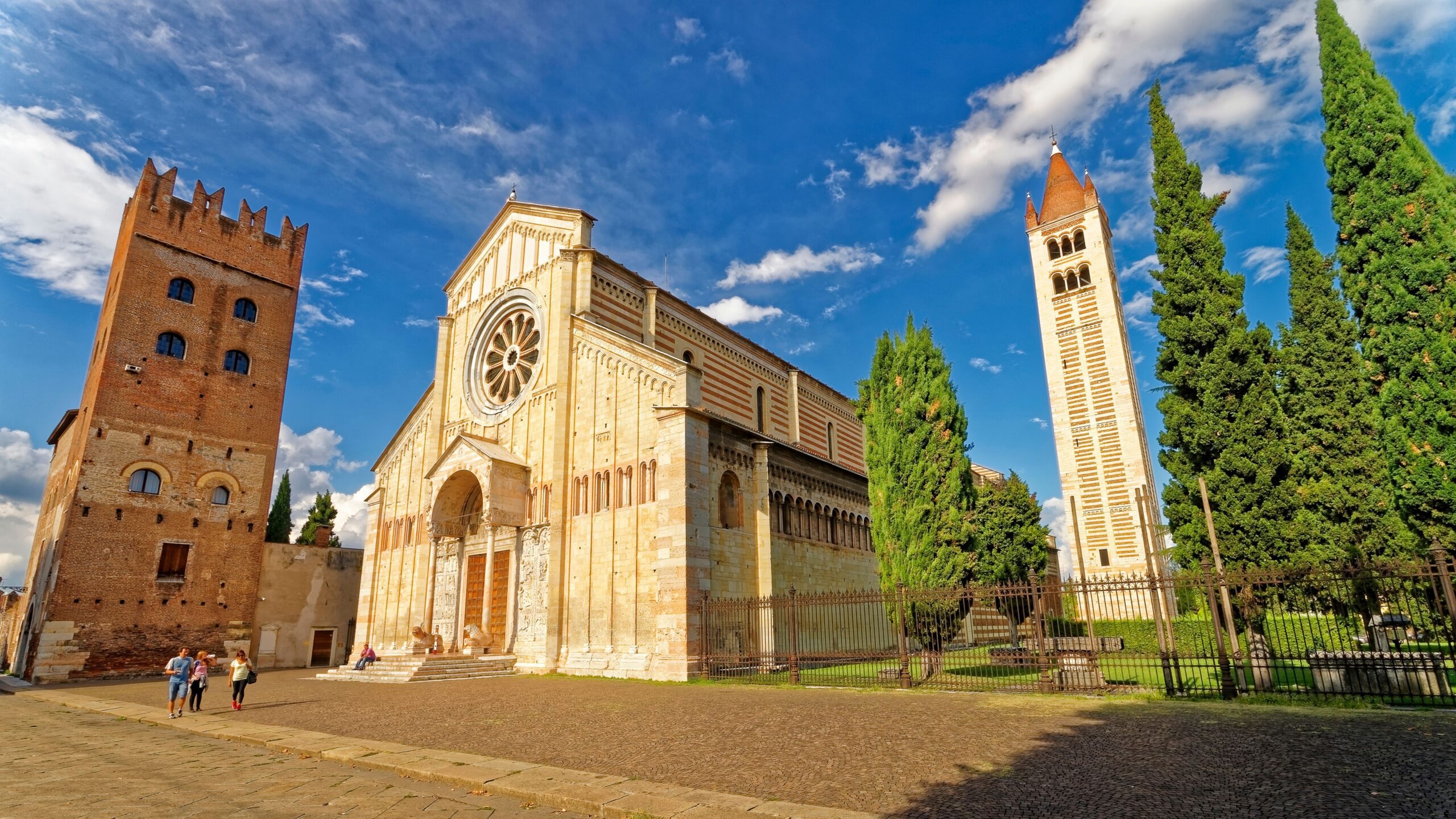
The San Zeno neighborhood preserves one of the city’s most recognizable identities. Centered around its Basilica, the urban fabric consists of squares, artisan workshops, and historic businesses that keep local traditions alive. Despite decades of change, San Zeno remains a place where the sense of community feels most tangible.
Verona Through Stories, Flavors, and Connections
In Verona, food also follows hidden paths. Small taverns (osterie), historic bakeries, artisan workshops, and wine shops preserve traditions that evolve without losing touch with the land. Many of the city’s authentic flavors are found away from main streets, inside family businesses that tell stories of everyday relationships and traditions.
This same concept inspires our food and wine walking tour in the footsteps of Dante: a narrative itinerary through the historic center following flavors, tales, and contemporary traditions linked to medieval Verona. Between local specialties, regional wines, and stories of exile, the tour offers a fresh way to read the city, where food becomes cultural memory and urban storytelling.
Getting Lost to Find Verona
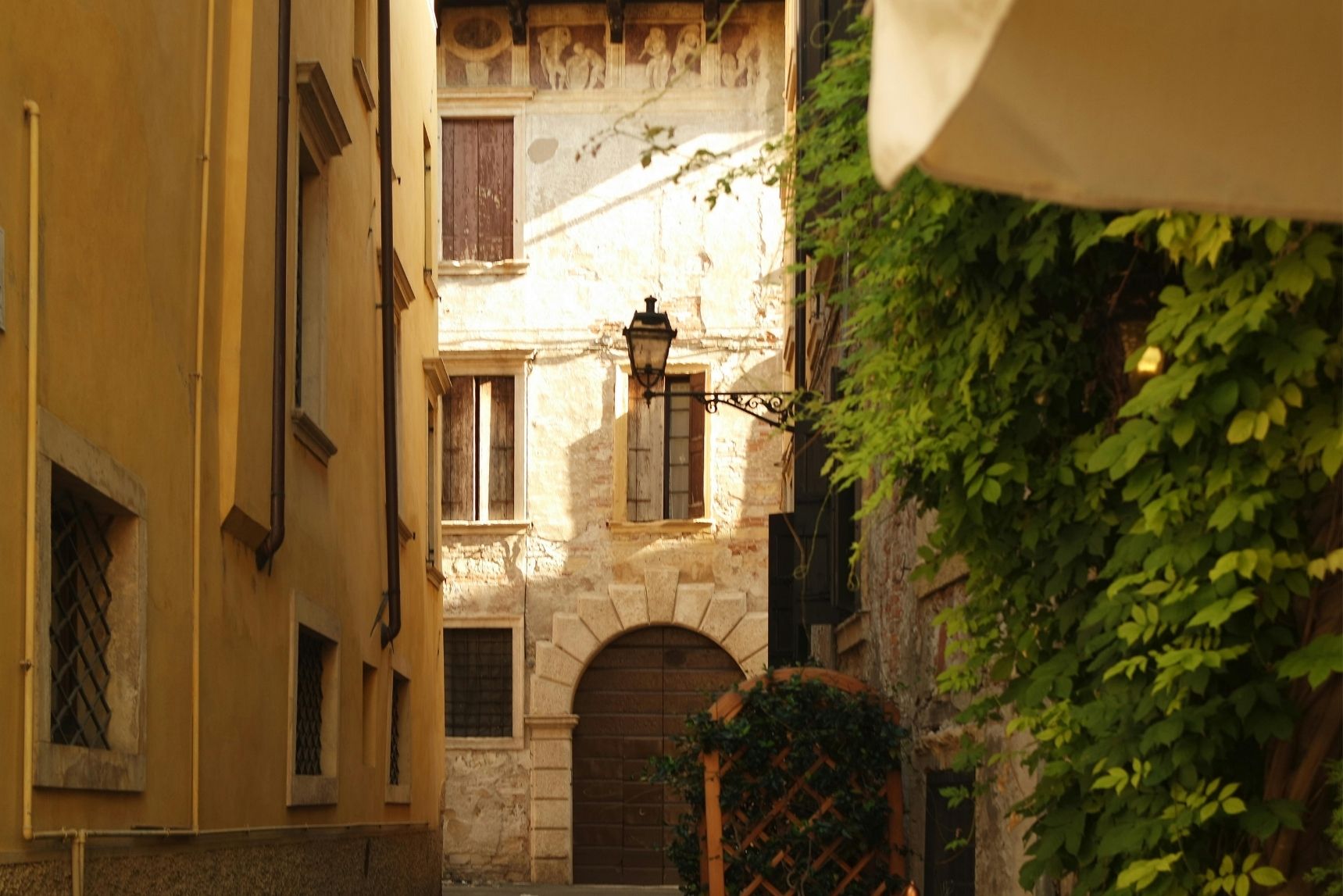
An itinerary in Verona gains depth when you stop following a checklist of sights and start following your curiosity. The medieval city seems built to invite detours. Narrow alleys, inner courts, unexpected passages, and sudden vistas turn your walk into continuous discovery.
Here, getting lost doesn’t mean losing your way. It means giving yourself time to observe, to slow down, and to accept that some of the most memorable experiences stem from taking a road for no specific reason. Perhaps this is the quality that makes Verona so distinct: its ability to surprise without pretense, tell stories unhurriedly, and let details shape your memories.