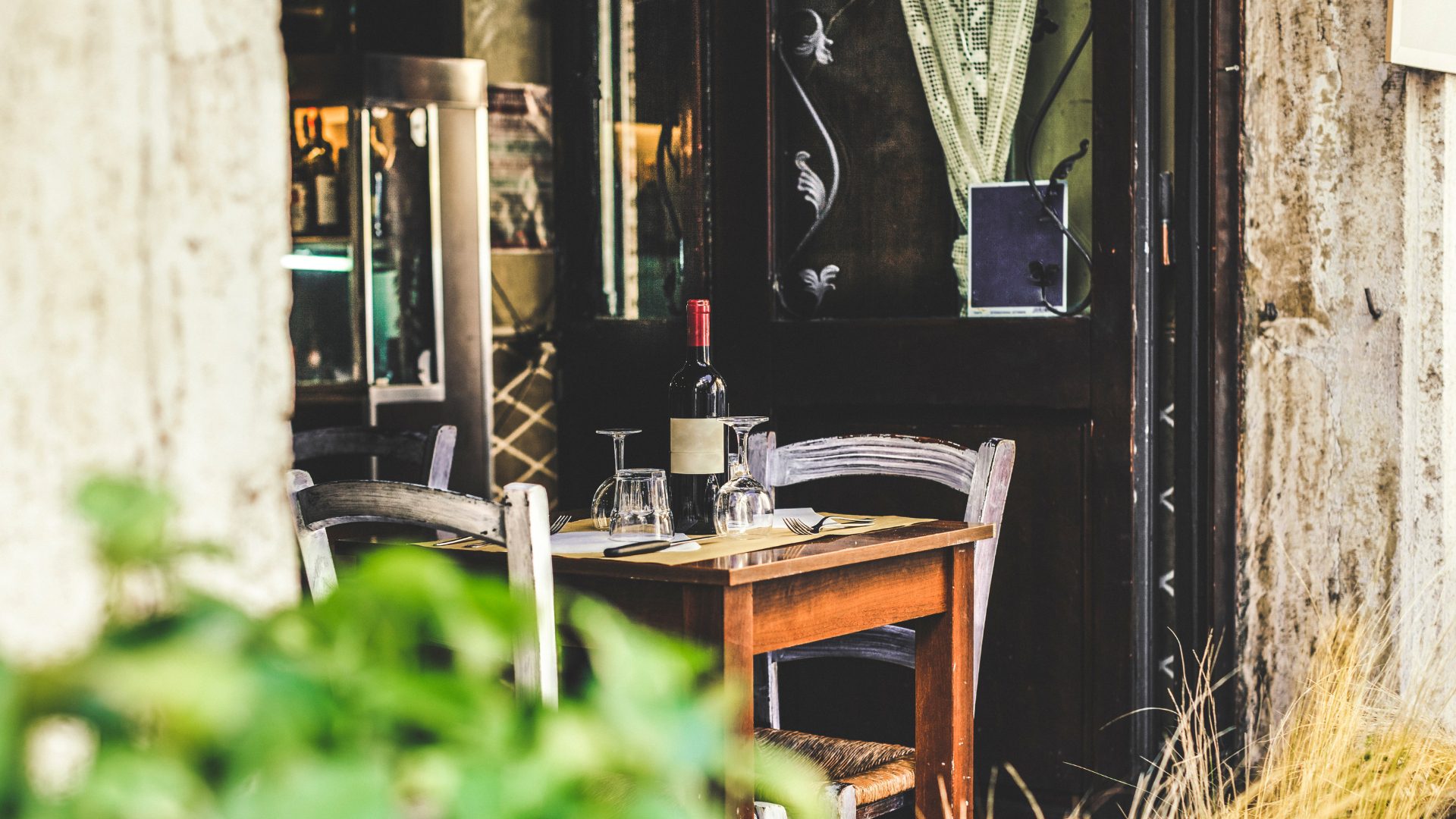

Speaking of typical Veronese products means entering the heart of a city that continues to tell its story through food. Verona preserves an authentic gastronomic tradition made of handed-down recipes, local ingredients, and daily gestures that still define the identity of the region today.
Veronese cuisine represents the perfect encounter between the rural soul of the plains and the extraordinary natural diversity of the province. Historically linked to simple ingredients and rural culture, local gastronomy has managed to elevate humble preparations into genuine symbols of local tradition, enriching itself over time through the influences of Venetian rule and ancient noble courts.
You only need to walk through the historic center to sense this deep connection with the land: the scent of freshly baked bread coming out of the bakeries in the morning, the traditional taverns (osterie) where people still gather for a chat (“do ciacole”) over a glass of wine (“un goto de vin”), and the small artisan shops that preserve flavors unchanged while the city changes around them.
The variety of typical Veronese cuisine perfectly reflects the geography of the province. From freshwater fish from Lake Garda to the cheeses and meats of Lessinia, passing through the rice cultivated in the southern plains and the great wines of Valpolicella, every area contributes to building a unique culinary heritage. It is a concrete, sincere cuisine deeply rooted in the seasons, capable of telling the story of Verona through its dishes, its products, and the stories of the people who continue to pass down its traditions.
A Verona se magna par vivar, ma se beve par goder - In Verona you eat to live, but you drink to enjoy
Wines that tell the story of Verona
This ancient popular saying perfectly captures the pride of the Veronese people in their immense winemaking tradition. Here, food provides sustenance, but wine is the true joy of life.
In Verona, a good glass of wine does not simply accompany a meal: it is an integral part of the conversation. The province of Verona is, after all, one of Italy’s most important wine regions, a unique mosaic of hills, light, and seasons that constantly change the character of the landscape.
Every area has its flagship wine. From Valpolicella come intense red wines such as Classico, Ripasso, Recioto, and the majestic Amarone. Moving towards Lake Garda, we encounter the freshness of Bardolino and Lugana, while the lands of Soave, Custoza, and Durello offer white and sparkling wines of great character.
Before discovering the great wines of the Veronese territory, it is worth experiencing them firsthand. If you wish to deepen your knowledge of the history, traditions, and flavors that have made Verona famous worldwide, you can take part in a guided wine tasting in the heart of the city. An experience designed for those who want to get to know the region through its wines, its stories, and its key figures.
Traditional dishes you cannot miss
Many of Verona’s typical dishes require time. They must be cooked with patience, but they must also be savored slowly to be fully understood. These are recipes born from tradition that reveal the true identity of the city.
Lesso con la pearà is the perfect symbol of this philosophy. This special sauce is made with breadcrumbs, broth, marrow, and plenty of black pepper. It delicate context accompanies boiled meat without overpowering its flavors. It represents a simple, unpretentious cuisine that focuses entirely on perfect balance.
The same applies to pastissada de caval, one of the oldest dishes in Verona. The meat is marinated for a long time and cooked very slowly. It is a patient way of cooking, born to transform humble ingredients into a great dish to share at the table. Alongside it, you will find stracotto di musso (donkey stew) served with polenta and bigoli col musso, unique dishes that speak of popular memory and respect for the land.
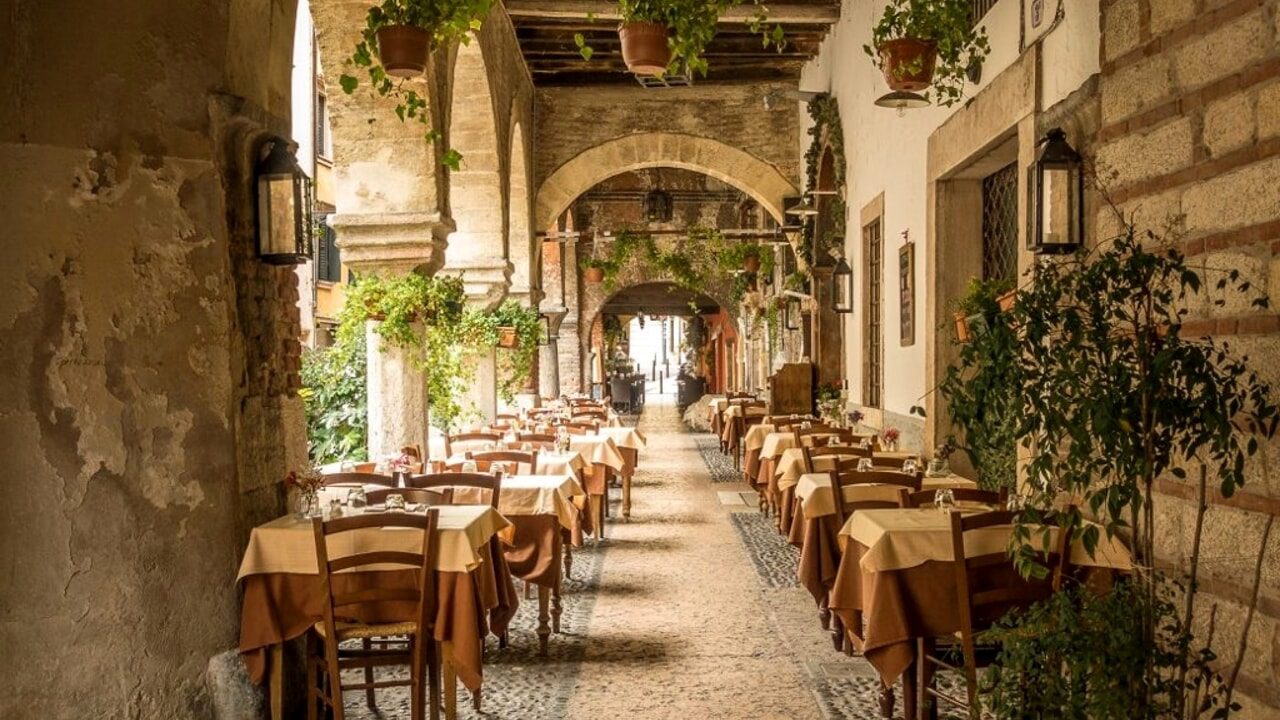
If you want to taste this tradition, the best traditional eateries are located along the charming porticoes of Via Sottoriva. Here, between a glass of Valpolicella wine and the atmosphere of old inns, you can still feel the slow pace of ancient Verona, back when it was a bustling river city.
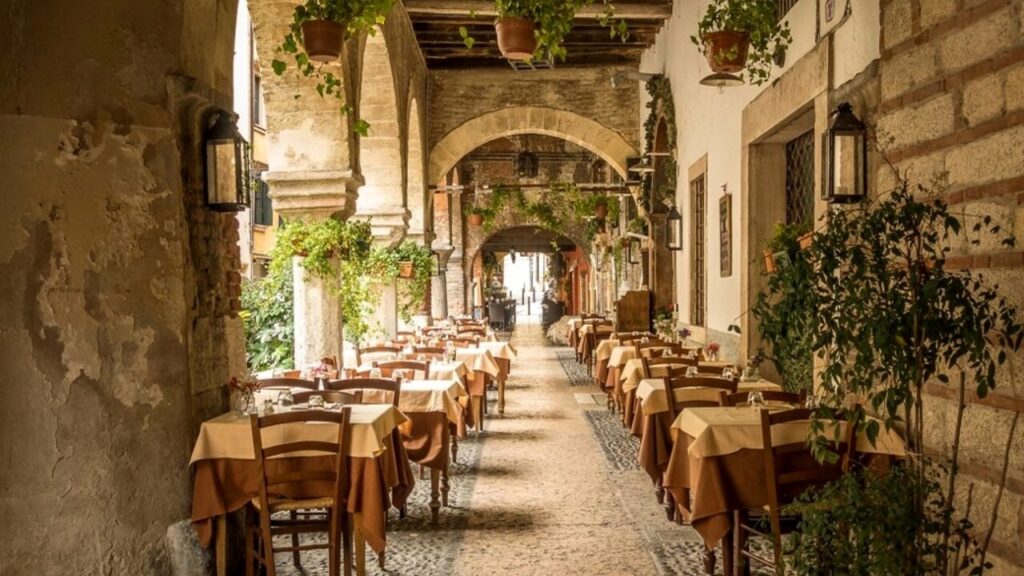
Tu proverai sì come sa di sale lo pane altrui - You shall prove how salt the savour is of others' bread
Rice, bigoli and traditional cuisine
Among typical Veronese products, rice occupies a central place thanks to the rice paddies of the plains that have shaped the landscape of the province for centuries. This is where the famous Riso Nano Vialone Veronese IGP is born, one of the most recognizable symbols of local gastronomy and an essential ingredient in many traditional recipes.
Among these, risotto all’Amarone stands out, capable of encompassing the intense aromas of Valpolicella in an elegant and profound balance. Alongside it, we find risotto con il tastasal and riso all’isolana, dishes that tell the story of a rural cuisine made of wholesome ingredients, handed-down gestures, and shared tables.
Together with rice, some of the most representative preparations of a river geography coexist. Bigoli con la renga, a historic dish based on herring, bears witness to the connection between Verona, trade, and the ancient waterways that linked the city to the sea. In the same way, pasta e fasoi and riso e bisi still preserve today the comforting flavor of home cooking—one born from the need to make the most of simple ingredients without sacrificing taste.
The tortellini di Valeggio sul Mincio, known as Nodi d’Amore (Love Knots), also fully belong to this gastronomic heritage. Famous for their paper-thin, hand-rolled pasta dough, they tell of a tradition built over time through the skill of artisans and a deep connection with the land crossed by the Mincio River.
In all these dishes, the very soul of Veronese cuisine emerges: a sincere gastronomy, tied to the land and the seasons, capable of transforming simple ingredients into recipes that continue to represent the region’s identity.
Sweets of Veronese memory
The Veronese confectionery tradition preserves a discreet elegance: these sweets represent an important part of the local identity, handed down through recipes that combine wholesome ingredients, artisan craftsmanship, and collective memory.
Among all of them, Pandoro and Nadalin tell two different souls of the city. Pandoro, famous all over the world, is the symbol of the Christmas holidays: soft, fragrant, and festive. Nadalin, on the other hand, is its ancient ancestor. Born in the Middle Ages to celebrate the Scaliger lordship, it still retains the character of popular tradition, with its more compact texture and characteristic topping of almonds and pine nuts.
Alongside the main festive stars lives a rich tradition of everyday sweets and local specialties. There is the risino, a shortcrust pastry tartlet filled with rice cooked in milk, an indispensable classic in city bakeries. There is the zaletto, a rustic biscuit made with cornmeal and raisins that recalls ancient farm kitchens. Then we find the torta russa, with its soft filling of almonds and amaretti enclosed in a fragrant puff pastry, and the famous sfogliatine di Villafranca, light and flaky, which have become one of the gastronomic symbols of the province.
Completing this sweet heritage is the precious mandorlato di Cologna Veneta, a nougat made with honey, sugar, egg whites, and abundant almonds, as well as the romantic Baci di Giulietta e Romeo, biscuits inspired by the city’s most famous legend, where cocoa and hazelnuts meet in a small tribute to the love story that made Verona famous worldwide.